Article Originally Published Here
When Protection Becomes a Privilege Instead of a Right
Across the globe, a troubling trend is reshaping our understanding of safety. From the favelas of Brazil to the gated enclaves of South Africa—and increasingly, right here in the United States—the line between public protection and private security is blurring. As fear grows and faith in public institutions diminishes, safety is becoming a commodity: something to be purchased, rather than a universal right.
This shift, while seemingly pragmatic in the face of rising crime and stretched police forces, is more than just a logistical solution. It reflects a deeper systemic failure—one where the wealthy insulate themselves behind layers of private guards, while the rest of society is left more vulnerable than ever.
A Symptom of Institutional Breakdown
In her seminal book A Savage Order, Rachel Kleinfeld outlines how weakened public institutions in fragile democracies push elites to retreat behind private security. This retreat, she argues, doesn’t just reflect inequality—it reinforces it. When those with power and influence can buy their own safety, they often stop advocating for public reforms. The rest of the population, lacking both influence and insulation, remains exposed to the consequences of an underfunded, ineffective public safety system.
This reality is becoming more apparent in the U.S., where private security guards now outnumber public police officers. There are over 1.1 million private guards across the country, compared to approximately 660,000 police. Corporations, cities, and even neighborhoods increasingly depend on private firms to patrol public spaces, monitor crowds, and protect property. It’s a growing industry—but also a growing concern.
The Two-Tiered Safety System
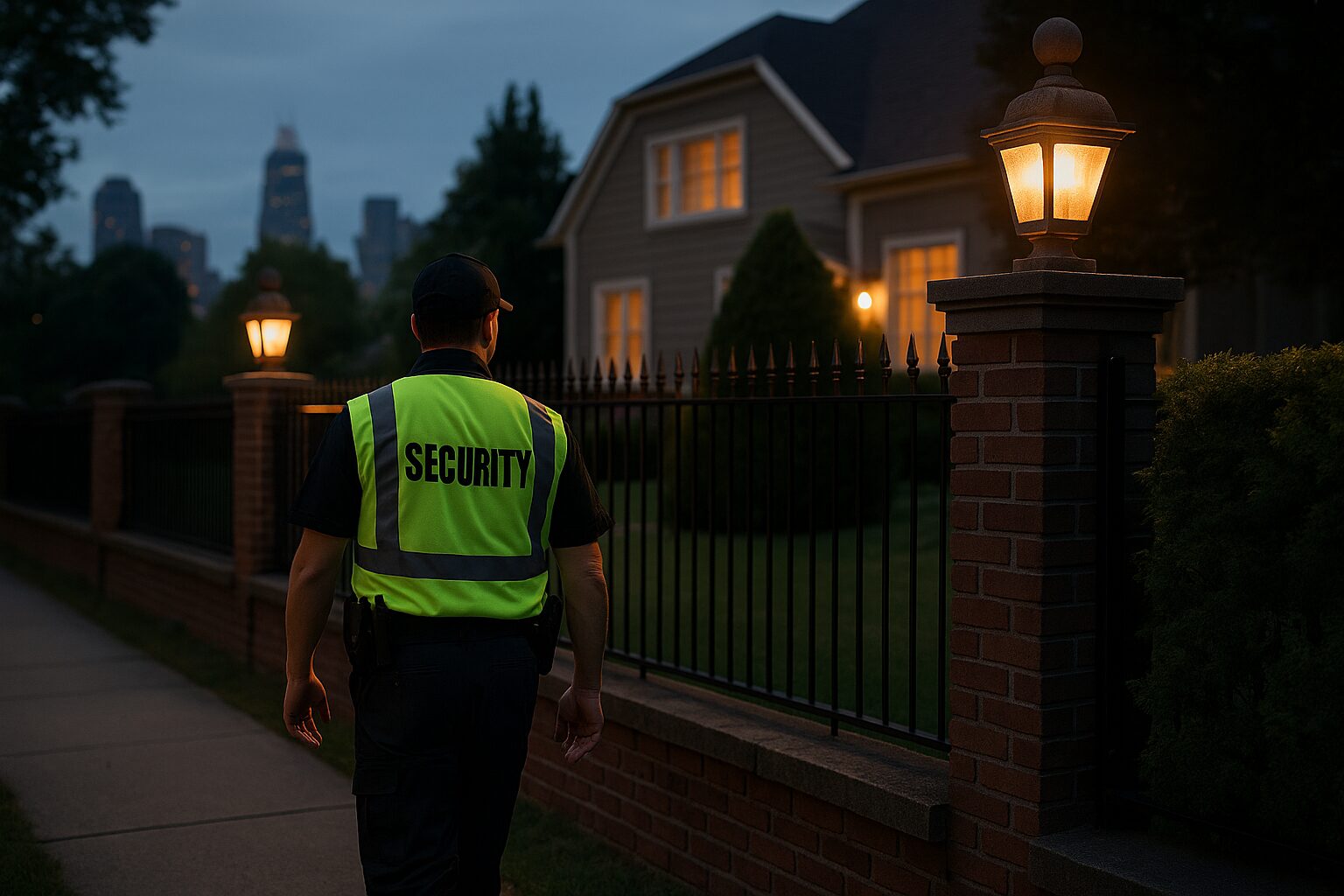
Consider the stark contrast between affluent areas like Beverly Hills or Chicago’s Fulton Market District—where private security patrols supplement local law enforcement—and cities like New Orleans, where residents in under-resourced neighborhoods may wait hours for emergency services. In wealthier districts, private security acts as an additional layer of protection. In low-income communities, there’s often no backup at all.
This divide is not just geographical—it’s philosophical. When downtown districts hire private patrols and adjacent neighborhoods go unprotected, the fabric of civic unity begins to unravel. Safety, once considered a shared social contract, begins to resemble a luxury good, reserved for those who can afford it.
This isn’t about criticizing individuals for seeking protection. In uncertain times, seeking security is a rational response. The concern lies in the broader implications: When communities normalize the idea that protection must be bought, it signals the breakdown of public responsibility.
Real Safety Is Rooted in Trust, Not Transactions
True protection doesn’t come from cameras or guards alone. It’s built on relationships—between citizens, communities, and institutions. When people trust that the systems around them will work, they feel safe. When they don’t, they build walls—literal and figurative—around themselves.
Ancient philosopher Laozi warned against this false sense of security over two thousand years ago. He recognized that when people isolate themselves through wealth and walls, they often sow the seeds of deeper societal instability. That insight remains as relevant today as ever.
Private security, no matter how advanced or professional, cannot substitute for the trust and cohesion that come from functioning public institutions. And while privatized protection may offer temporary peace of mind for a few, it often erodes the foundation of collective safety for the many.
Reclaiming Safety as a Public Good
Despite these challenges, there is hope. Across the country, communities are experimenting with alternative approaches that emphasize cooperation over division. Violence-interruption teams, mental health crisis units, and community-led safety programs offer compelling models for how we might rebuild public safety from the ground up.
These initiatives demonstrate that security doesn’t have to be transactional. It can be based on connection, shared responsibility, and proactive care. But such models require investment—not just in funding, but in political will and public trust.
To move forward, we must reinvest in public systems with transparency, accountability, and equity at their core. That means restoring effective police response, but also expanding what safety means—supporting mental health resources, housing stability, and youth programs that prevent crime before it starts.
A Choice Between Divided Protection and Shared Security
If we continue on our current path, the consequences are clear. A society built on privatized protection is one where inequality deepens, public trust erodes, and community cohesion dissolves. The walls we build today—to keep danger out—may tomorrow become monuments to a broken system we failed to repair.
But there’s still time to change course. By reaffirming safety as a shared responsibility and a public right, we can rebuild a system that protects everyone—not just those who can afford to buy in. Security should not be for sale. It should be a foundation for democracy, equity, and collective resilience.