Article Originally Published Here
As incidents of retail and property crime rise and police departments face staffing challenges, various sectors in Maryland are turning to private security guards for protection. Neighborhoods, apartment complexes, big-box stores, fast-food chains, hospitals, banks, and schools are increasingly employing over 26,000 licensed private security personnel to help deter crime and enhance safety, according to state data and industry experts.
Retailers, in particular, are bolstering security to combat organized retail crime, with thieves often exploiting Maryland’s port and Interstate 95 to transport stolen goods. Cailey Locklair, president of the Maryland Retailers Alliance, explained that businesses feel compelled to act independently if the broader system fails to provide adequate protection.
Security firms in Maryland must be licensed, a requirement that has led to a 48% increase in the number of licensed agencies from 2017 to 2024, as per a Capital News Service analysis. There are now approximately 1,060 licensed security companies in the state, some of which also offer investigative services.
While security guards working for licensed firms must have licenses, those employed directly by businesses like convenience stores are not required to be licensed. This distinction often results in unlicensed guards receiving lower wages. However, businesses tend to prefer licensed guards due to the mandatory background checks and approvals by Maryland’s licensing agency.
A new law, effective January 1, mandates licensing for all security guards and requires initial training of 12 hours approved by the Maryland Police Training and Standards Commission, unless the applicant is a former police officer. The law also necessitates that companies carry liability insurance and that the training costs be covered by either the firm or the individual guard. This legislation aims to enhance oversight in an industry that has previously seen minimal regulation in Maryland.
The law’s passage came as a surprise to some lawmakers, who were unaware of the lack of minimum requirements for security guards in the state. Nick Paros, regional vice president of Allied Universal Security Services and a retired Maryland State Police officer, noted that the state’s prior regulations were insufficient.
To obtain a guard license, an individual must be employed by or be a prospective hire of a licensed firm, demonstrate good moral character and reputation, and have no disqualifying criminal history. The Maryland State Police assess various factors, such as the severity and recency of any criminal background.
Maryland recognizes different categories of security guards, including off-duty police officers, special police officers, armed and unarmed security guards, and private detectives. Special police officers and off-duty police officers are the only guards authorized to detain and arrest suspects, with the former restricted to the properties they are hired to protect.
Unarmed security is more common in Maryland, but there is growing interest in armed security, despite the associated risks and higher costs.
Critics argue that Maryland’s new law does not go far enough in regulating the security industry. Robert McCrie, a professor at John Jay College of Criminal Justice, criticized the training requirements as minimal and insufficient for the challenges guards may face. Rodney Hill, a retired Montgomery County Police lieutenant deputy district commander, acknowledged the new training requirement as a good start but insufficient.
The law includes training on criminal law, appropriate use of force, de-escalation techniques, and interactions with individuals in crisis, with recertification required every three years.
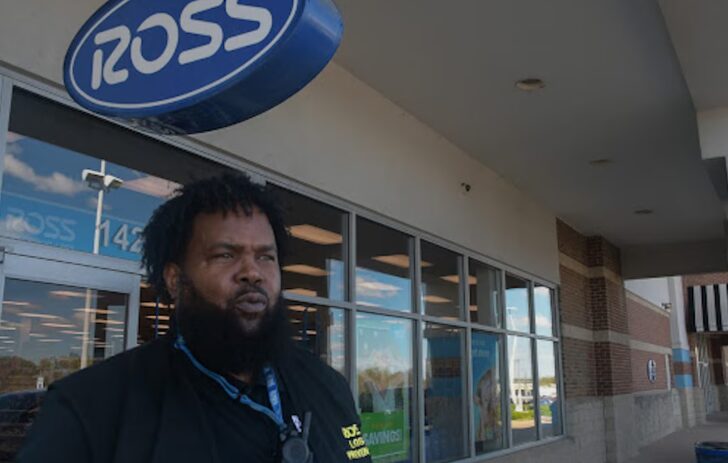
For many businesses, security guards are vital in addressing issues like irate customers and preventing shoplifting. For instance, Alex Godfrey, a security guard at a Ross Dress for Less store, noted the challenges in dealing with shoplifters, who often exploit the guards’ lack of arrest authority. In such cases, guards rely on local police for assistance.
The growing use of private security has sparked concerns about creating isolated “affluent bubbles” of safety. Caprice Smith, a retired police officer and criminal justice lecturer, emphasized the need for inclusive safety measures that do not exacerbate societal divisions.
Advocates of the private security industry welcome the new regulations, viewing them as a step toward recognizing the importance and professionalism of the security sector. Nick Paros from Allied Universal Security Services noted that the state’s acknowledgment of security work as distinct from other services like lawn maintenance or housekeeping is a positive development.
As Maryland moves toward stricter oversight and more comprehensive training requirements, the security industry may see further changes aimed at ensuring both public safety and the protection of security personnel. The hope is that these measures will create a more standardized and reliable system, balancing the need for effective crime deterrence with the rights and well-being of all involved.