
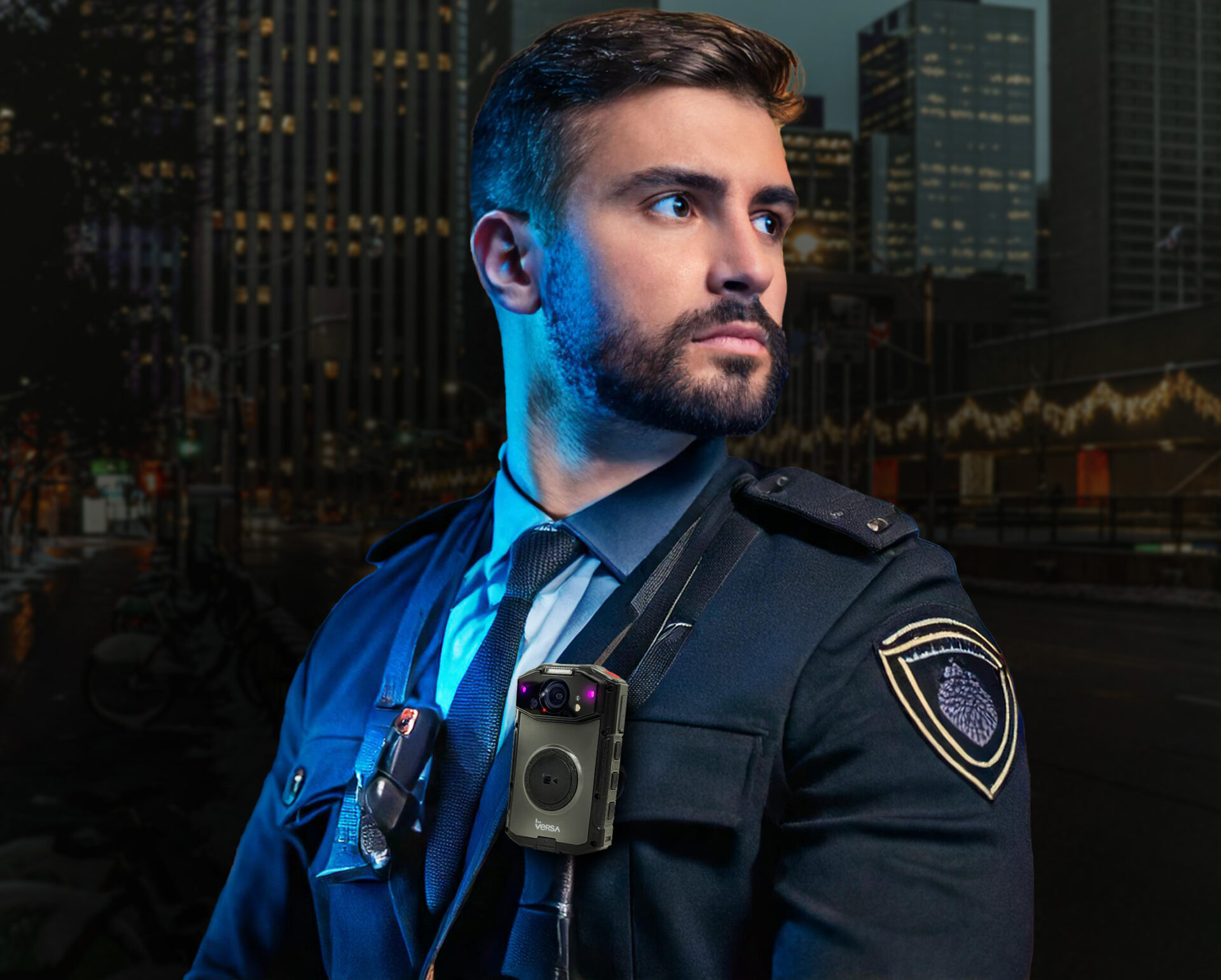
The growing need for better private security command and control in business operations has evolved more comprehensive, integrated, and technologically advanced solutions, such as push-to-talk over cellular (PoC) coverage over all major cellular networks in addition to Wi-Fi for broader reach and more reliable connectivity, and command and control infrastructure which permits more flexible system scalability.
By Jim McMahon
Businesses are increasingly recognizing the need for robust security measures due to rising crime rates, changing security landscapes, and evolving threats like cybercrime and terrorism. This is leading to a growing need for centralized, integrated, and technically advanced security solutions that provide comprehensive protection and efficient management to mitigate risks and protect valuable assets in increasingly complex and dynamic environments. Critical to such security operations is the command and control center.
Private security command and control centers, also known as security command centers, are centralized hubs that monitor and manage security incidents in real-time. They collect data from various sources, such as surveillance systems, intrusion detection sensors, access control systems, and security personnel. This information helps security professionals identify potential threats and vulnerabilities and respond proactively. The command centers facilitate communication between different teams involved in security operations, which can improve collaboration and streamline decision-making.
Not all private security operations manage security command centers with a high level of performance, however. Traditional systems in use by private security lack the speed and clarity required for real-time coordination. Delays and miscommunication between teams can slow response times and compromise mission-critical decisions, which can lead to costly mistakes that diminish safety.
Proactive Threat Detection and Response versus Reactive Response
Businesses are moving more in the direction of proactive threat detection and response, as opposed to a reactive response protocol. To achieve this, they are seeking highly centralized management systems to consolidate security functions, improve visibility, ensure compliance, and streamline operations. Integrated security solutions and centralized management systems enable businesses to quickly identify and react to potential threats, enhancing situational awareness and reducing response times.
To achieve optimal functionality, security command centers need essential capabilities that enhance their operational efficiency and effectiveness. These capabilities can be summed up as follows:
- Monitoring and Detection – serving as a nerve center for continuous surveillance of security systems, such as surveillance cameras, access control systems, and intrusion detection systems, to detect potential threats and breaches.
- Incident Response and Management – facilitating coordinated responses to security incidents, ensuring timely action and communication with personnel on-site or with external agencies like law enforcement, if needed.
- Data Collection and Analysis – the security command center is a hub for collecting and analyzing security data from various sources to gain insights into patterns, trends, and potential vulnerabilities.
- Communication and Coordination – the command center facilitates seamless communication between security teams, other departments, and relevant stakeholders to ensure everyone is informed and working together effectively.
- Real-Time Situational Awareness – by consolidating information from different sources, the center provides a comprehensive real-time view of the security environment, enabling quick assessment of threats and informed decision-making.
- Scalability and Flexibility – businesses require security command centers that can adapt to their changing needs, easily incorporating new components and integrating with existing systems.
- Cost-Effectiveness – Implementing centralized and integrated security solutions can be more cost-effective in the long run by reducing hardware, maintenance, and licensing costs associated with conventional security systems.
Although all security command centers embody some of these capabilities, only a few systems encompass all attributes. The most comprehensive of these is Versa Dispatcher, developed by Versa Innovations, Inc., USA (Versa), which delivers state-of-the-art command and control communications solutions for security professionals nationwide. This latest generation of security command centers makes it an ideal system for closer review.
Versa Dispatcher
What makes Versa Dispatcher so unique as a security command center is its enhanced push-to-talk over cellular and Internet (PoC) two-way radio functionality. Unlike traditional security two-way radios that rely on radio frequency (RF) transmission, PoC is an instant communication capability that connects cellular service and Wi-Fi®, delivering a broader two-way communications capability for security personnel.
Conventional two-way radio systems have gaps in coverage that limit their use. This can be caused by signal obstruction from terrain, buildings, foliage, being out of range, or even bad weather. PoC solves these issues by translating the radio audio to a digital format, which allows it to be sent easily over cellular and Internet networks. This is particularly useful for security professionals who need to communicate across long distances or in areas where radio coverage may be limited.
When PoC users press the push-to-talk button on their device, it sends a signal over the cellular or Internet network to a PoC server. The server then forwards the signal to the intended recipient’s PoC device, where it is decoded and played through the device’s speaker.
Until recently, PoC security command centers were limited to connectivity with just one or two cellular networks. Versa Dispatcher, however, permits the two-way radio device to connect with all major cellular networks, enabling a much broader spectrum of connectivity, in addition to Wi-Fi. A data plan SIM card (similar to those used in cell phones) is installed in each PoC device to enable rapid connection to cellular service and the Internet. Coverage is determined by the cellular network of the SIM card in use.
Versa Dispatcher allows users to communicate with one or more receivers instantly, in a half-duplex mode, that is, both parties can send and receive information but not at the same time. It is the only security command center that can provide connectivity with multiple cell networks as well as Wi-Fi, delivering unparalleled real-time connectivity and reach between on-site security personnel and their command center.
This latest-generation security command center permits exceptional data collection, communication and coordination – monitoring, managing and storing audio and live-streaming evidence-grade video in 1080p HD, and enhanced GPS tracking of security personnels’ locations and travel routes, with real-time viewing of their movements, delivering precise timestamps for location and route data, allowing for accurate recording and analysis of activity. Its enhanced geofencing protocols create virtual boundaries around specific areas, triggering alerts when security personnel enter or leave designated zones. This can be used for monitoring specific locations, ensuring security personnel stay within designated areas, or triggering alarms in case of unauthorized entry.
PoC systems completely eliminate the need for expensive radio infrastructure, and so is the case with Versa Dispatcher. Since the cellular and Internet infrastructure already exists, devicescan be deployed quickly, working out-of-the-box with SIM cards pre-installed. Unlike traditional radio frequencies such as VHF or UHF, devices connected to Versa Dispatchercan operate over cellular network bands spanning UHF to SHF bandwidths. For scalability, a limitless number of devices can be added at any time.
Because Versa Dispatcher utilizes cellular and Internet networks, FCC fees are eliminated.
NetEDGE Radio-as-a-Service
Where Versa Dispatcher has elevated security command center operation to a higher level of communication and coordination through improved connectivity, it has also ushered in a new paradigm of scalability and affordability with NetEDGE radio-as-a-service (RaaS).
Most businesses are familiar with software-as-a-service (SaaS), delivering software solutions that do not burden the company with managing the service or covering costly upgrades. Likewise, taking PoC to a higher level of performance can be achieved for security companies by integrating radio-as-a-service into PoC operation.
Versa Dispatcher’s NetEDGE RaaS approaches two-way radio as a full-service, yet highly-flexible solution for security operations, rather than a hardware-centric system which has been the paradigm with two-way radio services for almost 100 years. Whether 8 or 8,000 radios are required, the heavy infrastructure and cumbersome licensing costs that are inherent with conventional two-way radio systems, are no longer part of the PoC/RaaS equation.
RaaS makes it possible for security businesses to shift up-front capital investments to manageable costs using an operating expenditure model. The NetEDGE model offers more flexibility in system scaling to add radios as needed, and a wider offering of options in pricing. While the security business does not own the hardware, they do not have to be concerned with their communications assets becoming obsolete, because they have access to upgrades without incurring additional costs. Downtime is minimized by providing timely repairs, as well as continually supporting the latest encryption technology to maintain the highest levels of security.
The Right Technology to Meet Security Challenges
Private security companies play a pivotal role in safeguarding people and property across a wide range of settings including transportation, malls, hotels, hospitals, schools, churches, manufacturing, construction, warehousing, and entertainment. A state-of-the-art security command center is crucial for ensuring seamless operations and maintaining the highest levels of security. The latest PoC / RaaS command center technology is well positioned to meet the present and future critical challenges facing private security companies.
About Versa Innovations, Inc., USA
Delivering innovative two-way communication solutions for security and mission-critical teams under the VERSA brand, the company’s commanding presence in the Philippine market with security professionals has been leveraged with recent product introductions in the U.S. market, where Versa delivers dependable PoC / RaaS command and control communications solutions for security professionals nationwide.
Versa first introduced its first commercial two-way radio in the Philippine market in 2009. Since then, Versa has developed a complete line of short-range, commercial, and pre-licensed radios. Dependable yet economical, Versa’s two-way radios are fast becoming the preferred brand for security professionals across multiple industries. Today, Versa is a leading builder of state-of-the-art Internet-based two-way communications platforms for security and business operations.
Versa is dedicated to providing cost-effective yet state-of-the-art command and control communications solutions to businesses across various sectors in the continental United States. The company goes beyond merely offering products, it is dedicated tocultivating enduring partnerships, and delivering solutions and services that set the standard for the security industry.
For more information contact Versa Innovations, Inc., USA; 9708 Gilespie Street, Suite A-107, Las Vegas, Nevada 89183; Phone (702) 627-1193; email [email protected]; www.versa-innovations-inc.odoo.com.
About the Author
Jim McMahon
Jim McMahon writes on industrial, manufacturing and technology issues. His features have appeared in more than 4,000 business and trade publications worldwide.








One Response