
Article Originally Published Here
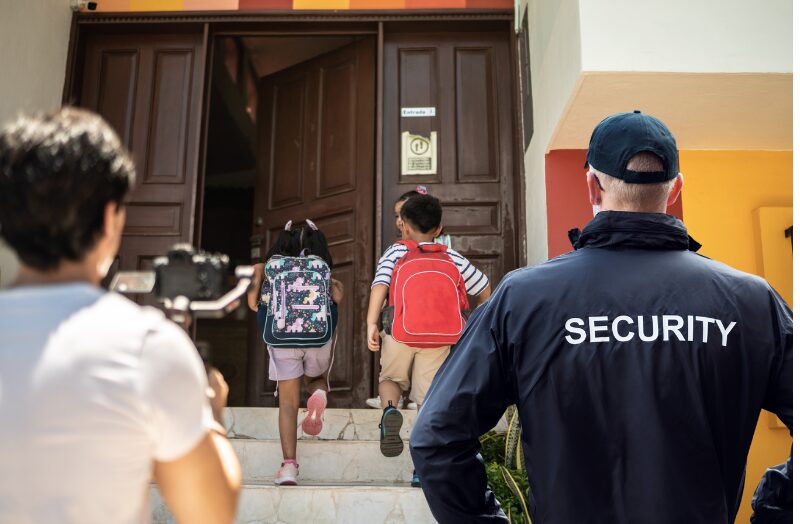
5 EYEWITNESS NEWS on Wednesday got a firsthand look at how other catholic schools have been handling security in the wake of the mass shooting at Annunciation Catholic Church.
We met with the director of Safety and Security for Ascension Catholic Academy’s four Twin Cities’ schools as students at Ascension Catholic School finished their second day of school.
Potential threats were top of Director of Safety and Security Jameson Ritter’s mind long before it became a tragic reality just a few miles away.
“I think the biggest failures is if we don’t apply those lessons, because then what? Then we haven’t learned for the next one,” Ritter said.
“My job, in a lot of ways, is to wake up and think the worst of things, or be worried about things… In a lot of ways, I’m okay with that. I feel like that’s my role. That’s my job. It’s my background and training that allow me to do this. I’m blessed to have had all of the experiences in the public and private sectors that allow me to have this perspective and lend my voice to this. So it’s a burden I take knowingly, but yeah, it’s certainly, it’s a weight.”
Ritter made security changes at the four schools around the time he took the job about two years ago.
Now, all staff have radios, and no one makes it through the school’s locked double doors without clearance through a digital visitor management system, including Ritter.
“It shows that we’re embracing this, that we’re reinforcing that even people who know me aren’t going to let me in the building without signing in,” Ritter said.
Staff who come in early or stay late also have these FOBs, which are capable of calling 911 dispatch with a single click. Everyone also has a pocket-sized card detailing the school’s Standard Response Protocol on hand at all times.
“Very simple terminology, very simple direction. So it’s not, ‘I gotta open a binder and find the section on lockdowns.’ It’s ‘Locks, Lights, Get Out of Sight.’ It’s very basic, and so, we reinforce that both through training, and then we’ll bring those cards out and say, ‘Do we have any new staff here?’”
Ritter keeps his handy on his lanyard. He said that type of simplicity and constant reinforcement through training is key to safety.
As we stood next to young students’ handwritten notes to their peers at Annunciation, the biggest possible gap on Ritter’s mind was the roughly 20 yards between the school and the church.
“It’s really a moment where we kind of sit around a table and start asking those tough questions, are there things that we could be doing better in light of what we might be learning from tragedy and going from there?” Ritter said.
“We may not find any particular changes are needed, but we’re definitely asking the question. We’re going to be looking internally to make sure that we’re not missing anything that might be obvious.”






One Response