How training, communication, and support keep security operations humming
By Sandy Austin Goldstein
Security guard services often blend into the background of a site’s day when a security program is working the way it should. It can look easy from the outside, but that kind of consistency does not happen by chance. At Orion Protective Services, officers arrive already oriented to the site they are assigned to. They understand how the location runs, how people come and go, and what a normal day looks like. That early familiarity gives them context from the start instead of guesswork, and it also gives them a baseline for noticing when something is different.
As they carry out their regular duties, watching the site, interacting with people, and reporting what they see, officers are constantly taking in small details. Over time, they develop a practical sense for what belongs and what does not, and when something is worth flagging to a Field Supervisor versus when it is simply part of the normal flow of the day.
Because of that preparation, most days move as expected. Questions get answered, decisions get made, and things stay on track. Officers are not figuring things out as they go. They are working within something they already understand, which makes it easier to notice small changes early.
Even with that level of preparation, not everything stays predictable. A schedule may shift without much notice, an access point may not work as it normally does, or something in the day may feel slightly off. Officers rely on their training and their understanding of the site to decide what they can handle directly and what should be passed along for input. That judgment is part of the job and helps prevent small issues from growing.
How Things Stay on Track
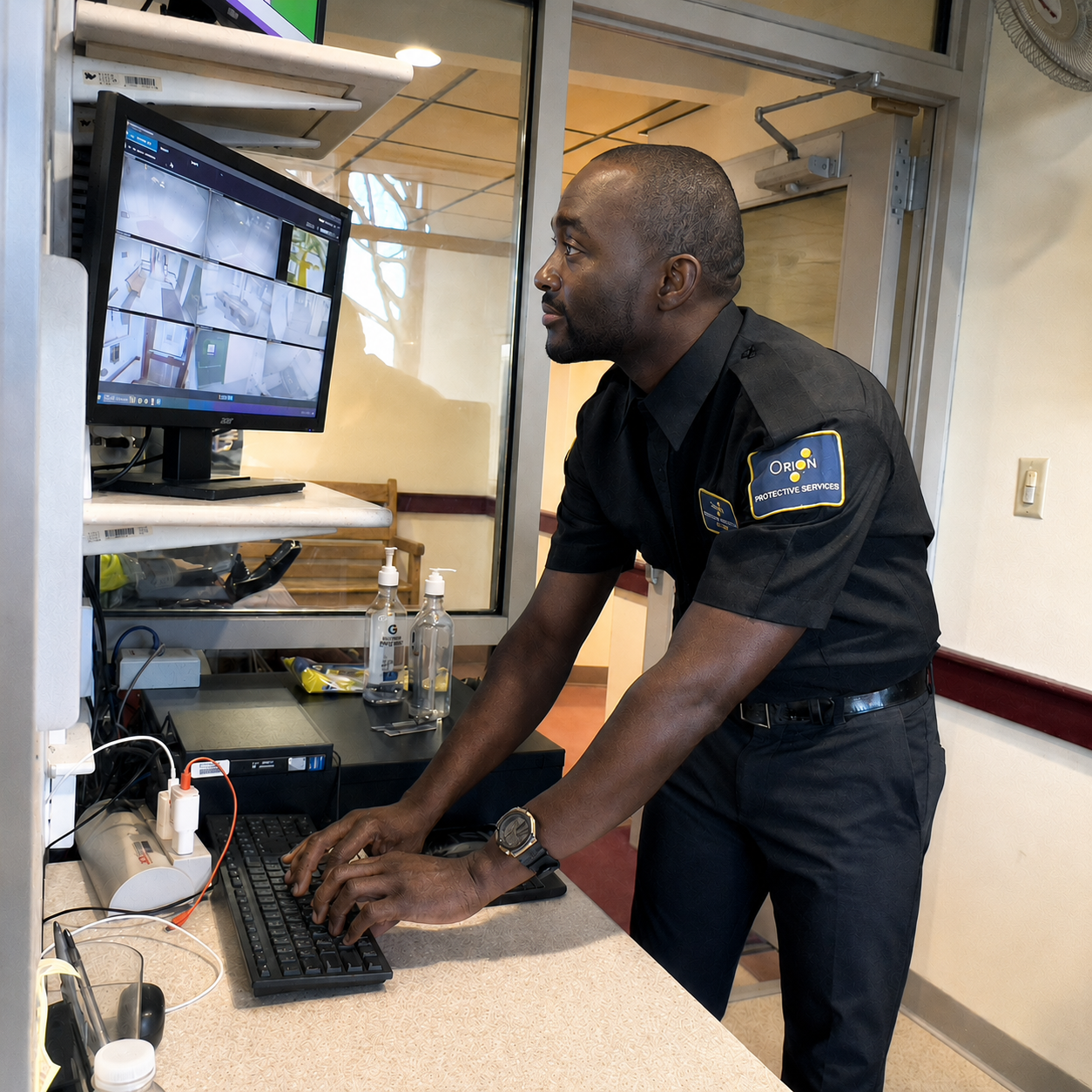
When communication is clear and support is easy to reach, officers can confirm what they are seeing and act while things are still unfolding. That might mean stopping someone at a security desk before they move further into a site, clarifying something before access is granted, or addressing a concern before it develops further. The value is in acting while the situation is still in front of them.
At Orion, Field Supervisors play a central role in that process. They are the first point of contact when something needs to be confirmed or escalated, and they stay connected to officers on site and to management so decisions do not get delayed. Clients also have direct access to a member of the Orion management team when needed, so questions can be addressed in real time rather than sitting in a queue.
This approach has been carefully built, refined, and sustained over the past sixteen years at Orion Protective Services under the leadership of Ed Ramsdell, President and CEO. It was shaped in part by his earlier experience in larger organizations where timely access and communication were not always there when the situation called for it.
When Small Things Start to Matter
Most issues start small, usually something familiar showing up in a new way. A schedule changes without much notice, an access point does not work the way it normally does, or something just feels slightly off in the day. None of this is unusual. It is part of working in real time, where plans and conditions do not always line up perfectly. What matters is how officers interpret what they see while doing their normal work. Because they are already familiar with the site, they can tell when something is routine and when it needs attention. That judgment, knowing what to flag and when, is often what keeps small issues from becoming larger ones.
If confirmation is quick, those moments stay contained. If it takes longer to reach the right person, even simple issues can take longer to resolve than they should, not because anything is being handled incorrectly, but because there is less ability to act in the moment.
Built Around Access and Communication
Orion Protective Services was founded by Ed Ramsdell, who brings more than 40 years of experience in security leadership, including senior roles inside larger organizations. Across that experience, the same challenge came up repeatedly. Officers in the field were capable and understood their posts, but when they needed input, the right person was not always immediately available. In fast-moving environments, that gap can matter more than it might seem.
Orion was built in part to close that gap in field decision-making, but also because clients often could not reach someone who could act on a situation in larger, more corporate organizations. Responses could be delayed or routed through layers that slowed things down when timing mattered. From the beginning, Orion was structured so that communication would stay direct, with clients able to reach a live person on the Orion management team when needed. That level of access is part of how the company operates, not an added feature.
Some situations can be handled directly by the officer. Others require a quick check with someone who has more context. The difference is not complexity, but access, making sure the right person is reachable when needed. Field Supervisors stay connected to what is happening on site and step in when appropriate, while leadership remains engaged so decisions move without unnecessary delay.
Training That Builds Early Awareness
A steady operation starts before anyone arrives on site. At Orion, officers are introduced to each location in a way that reflects how it actually runs, what a normal day looks like, how people move through it, and what tends to signal change. That familiarity makes it easier to recognize when something is not quite right.
Training focuses on judgment as much as procedure. Officers learn what they can handle on their own and what should be passed along for support or confirmation. Field Supervisors remain available as conditions develop, so officers are not left working through uncertainty without backup. When that structure is in place, most issues are handled before they grow.
Consistency In Practice
Sixteen years in, this approach has remained consistent across different sites, environments, and client needs. Every location has its own pace and its own demands, but the expectations stay the same. Communication stays open, support is reachable, and decisions are made while situations are still developing.
That consistency shows up in practical ways. Officers understand their environment and what is expected of them. Supervisors stay connected to what is happening in the field, and clients receive clear responses without unnecessary delay. “This is not about reacting after something happens. It is about staying close enough to what is happening so most situations never need to escalate,” Ramsdell said.
What it Comes Down To
In security, what matters most is recognizing small issues early and addressing them before they become larger problems. Sites run well when communication is clear, decisions happen in real time, and the right people can be reached while things are still unfolding. When that is in place, small issues stay small and are handled before they turn into something more.
That is the foundation Orion Protective Services stands on every day.

By Sandy Austin Goldstein
Learn More:
Orion Protective Services
Website: https://orionprotectivesvcs.com/